
Why do some days bring a stronger urge to drink than others? A new study co-authored by Tammy Chung, a professor of psychiatry at Rutgers Robert Wood Johnson Medical School and director of the Rutgers Center for Population Behavioral Health, suggests that day-to-day changes in how people respond to alcohol-related cues may help explain why. Among young adults with hazardous drinking, faster-than-usual responses to alcohol-related words were linked to a greater desire to get drunk and heavier drinking on the same day.
Rather than being a fixed characteristic, these responses may change from day to day and help researchers identify moments when someone is more motivated to drink.
How Can Researchers Measure Responses to Alcohol Cues?
Alcohol-related words, images, places, or situations may become especially noticeable or meaningful to someone who drinks. Researchers call this alcohol attentional bias.
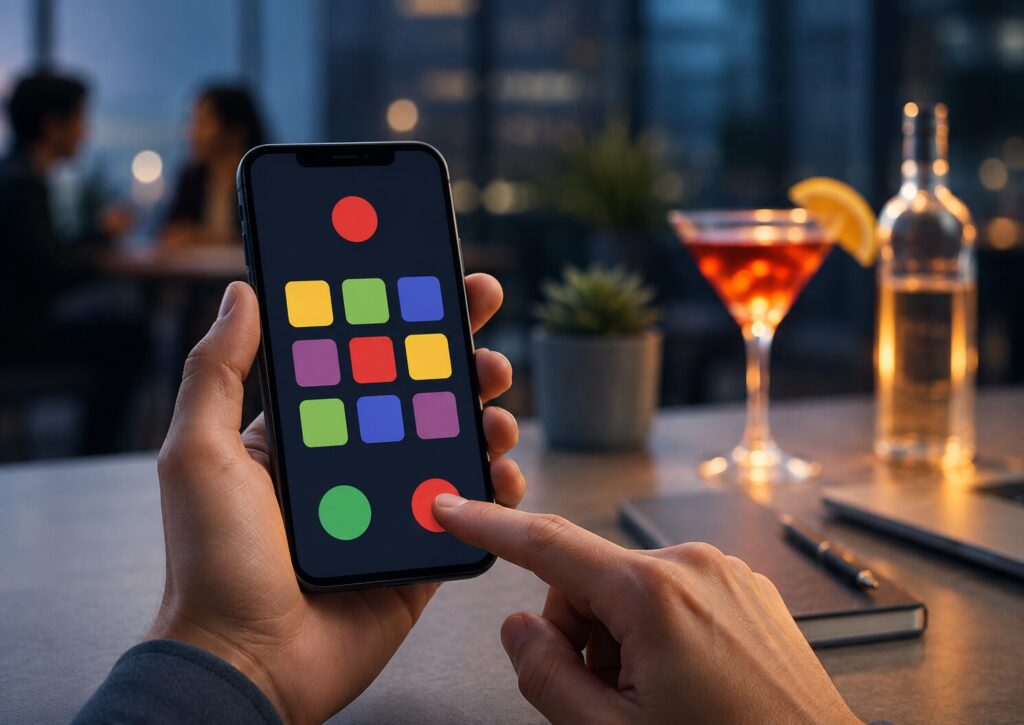
To study it, researchers often use a modified Stroop task. Participants see alcohol-related words, such as “vodka,” and neutral words, such as “jeans,” displayed in different colors. Their task is to select each word’s color as quickly as possible. Differences in reaction time can provide clues about how alcohol-related information is being processed at that moment.
Tracking Attention and Drinking Over Time
The study included young adults ages 18 to 25 who screened positive for hazardous drinking during an emergency department visit. Hazardous drinking means that someone’s alcohol use places them at increased risk for harm, but it does not necessarily mean they have alcohol use disorder. Participants were not seeking treatment.
Over 14 weeks, participants completed an alcohol Stroop task once per week and answered text-message questions about their desire to get drunk and how much they drank. The final analysis included 544 participants and more than 2,200 days of matched information.
The researchers compared differences between participants with day-to-day changes within the same person. This allowed them to ask not only who might be at risk, but also when risk might increase.
Responses Changed From Day to Day
The researchers found very little evidence that responses to alcohol cues were stable. Instead, nearly all of the variation occurred within the same individuals over time.
People who generally responded faster to alcohol cues were not necessarily more likely to want to get drunk or drink heavily. What mattered was whether someone responded faster than usual on a particular day. This suggests that alcohol-related attention may reflect a temporary change in motivation rather than a permanent vulnerability.
Faster Responses Were Linked to Greater Desire and Heavier Drinking
On days when participants responded more quickly than usual to alcohol-related words, they were more likely to report a desire to get drunk and heavier drinking. This may sound surprising because researchers have traditionally focused on slower responses, assuming that alcohol words capture attention and interfere with the task.
One possible explanation is that people may process alcohol cues more easily when drinking feels appealing, rewarding, or connected to their plans. Someone might respond more quickly when looking forward to a party, expecting to drink with friends, or already feeling a stronger desire for alcohol. In that moment, alcohol cues may feel more relevant.
What Happened After Drinking Began?
The connection between faster responses and drinking was not found on days when participants had already consumed alcohol before completing the task. Alcohol cues may be most meaningful before drinking begins, when someone is deciding whether or how much to drink. Once drinking has started, those thought processes may change, and alcohol itself can affect attention, judgment, and self-control.
The researchers also examined whether impulsivity explained participants’ responses. Traits such as sensation seeking, acting rashly during strong emotions, and difficulty planning ahead explained less than 1% of the differences in average responses. This supports the idea that alcohol-related attention may be shaped more by temporary circumstances than by stable personality traits.
Because fewer assessments were completed after drinking began, these findings require additional study.
Could This Become an Early Warning Signal?
The findings raise the possibility that mobile tasks could eventually help identify moments when someone may be more likely to drink heavily. A task might one day detect when alcohol cues have become unusually meaningful and prompt a supportive message or coping strategy before drinking begins.
However, this study does not show that the task is ready for clinical use, and it cannot prove that faster responses caused participants to drink. Changes in attention, desire, and drinking may all reflect the same underlying shift in motivation.
A More Dynamic View of Drinking Risk
Alcohol use is influenced by many factors, including mood, stress, social situations, expectations, access to alcohol, and past experiences. This study suggests that responses to alcohol cues may be another changing part of that picture.
If confirmed in future studies, these findings may help researchers better understand not only who is at risk, but also when support may be most useful.
Date: August 14, 2026
By: Ricki Arvesen